
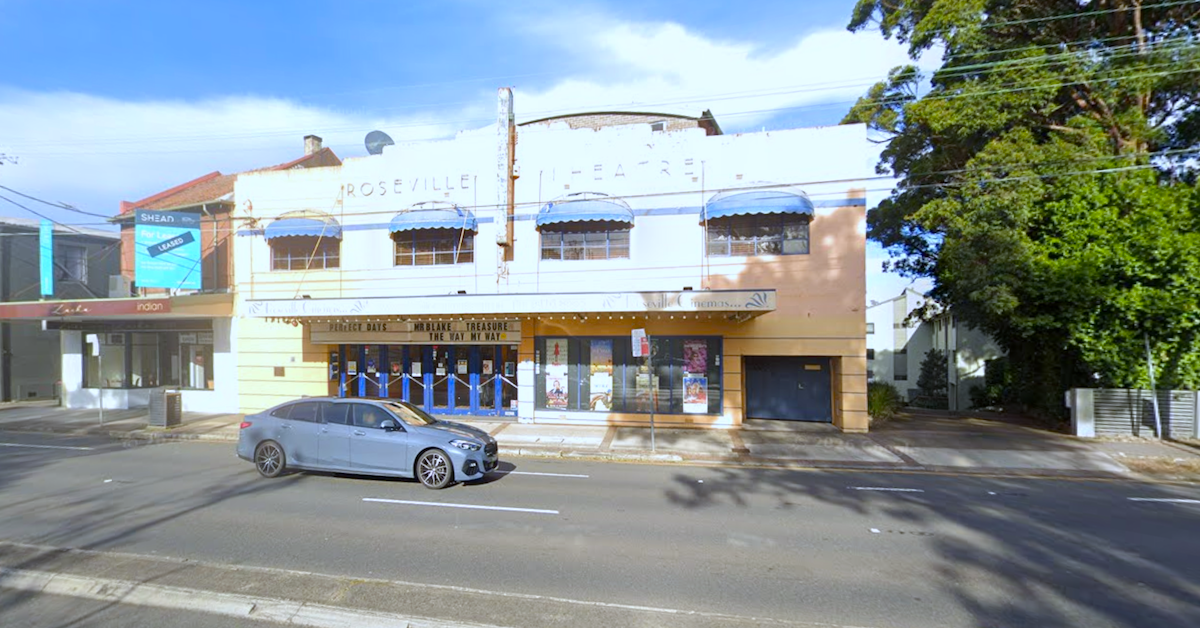
For over a century, the iconic marquee at Roseville Cinemas has lit up the Pacific Highway, surviving the transition from silent films to the streaming era. But today, the future of the beloved Art Deco venue hangs on a Supreme Court order—and a community holding its breath.
Following a Supreme Court of NSW ruling involving Macos Holdings, a court-appointed trustee has put the property at 112–116 Pacific Highway up for sale to settle debts owed to ANZ and a trust tied to the late Susan van Pinxteren.
While the projectors are still running and the doors remain open, the forced sale has sparked widespread anxiety across Sydney’s North Shore that a developer could soon move in.
A Community on Edge
Because the building sits just steps from Roseville railway station, the sale coincides with broader state planning reforms aimed at boosting housing density around transport hubs. For locals, the timing couldn’t be worse. Residents and patrons fear losing a cornerstone of local culture.
The concern has reached the halls of parliament, with Member for Bradfield Nicolette Boele calling for intervention to safeguard the site. Meanwhile, United Cinemas chairman Roy Mustaca raised practical concerns about the venue’s commercial viability, questioning whether any new owner could afford to keep operating it as a cinema under current economic pressures.
The cinema faces ongoing uncertainty rather than imminent closure, continuing its daily screenings with no demolition plans currently in place.
Protection in the Heritage System
Despite the public outcry, local heritage protections mean a prospective buyer cannot simply bulldoze the site.
Roseville Cinema is officially listed as a local heritage item (I111) under the Ku-ring-gai Local Environmental Plan. While the listing doesn’t prohibit future alterations, any incoming owner hoping to redevelop the property would face a rigorous approval process, including high-level heritage impact assessments and intense community scrutiny.
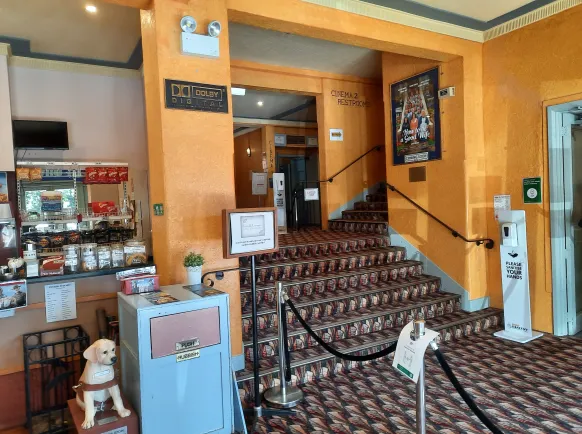
Advocacy groups, including Friends of Ku-ring-gai Environment, have already signaled they will fight to preserve the site’s architectural and cultural footprint.
A Century of Screenings
The cinema’s loss would sever a link to local history dating back to the early 20th century. The site originally served as a community hall, church, and school before permanent film screenings began in 1919 under the name Traynor’s Picture Palace.
In 1936, producer D.B. O’Connor spearheaded a massive overhaul that gave the building its distinctive Art Deco frontage. The venue found its modern identity in 1974 when Hans van Pinxteren acquired it, turning it into a premier independent cinema that his family nurtured for decades, eventually converting the single auditorium into a popular twin-screen venue in 1995.
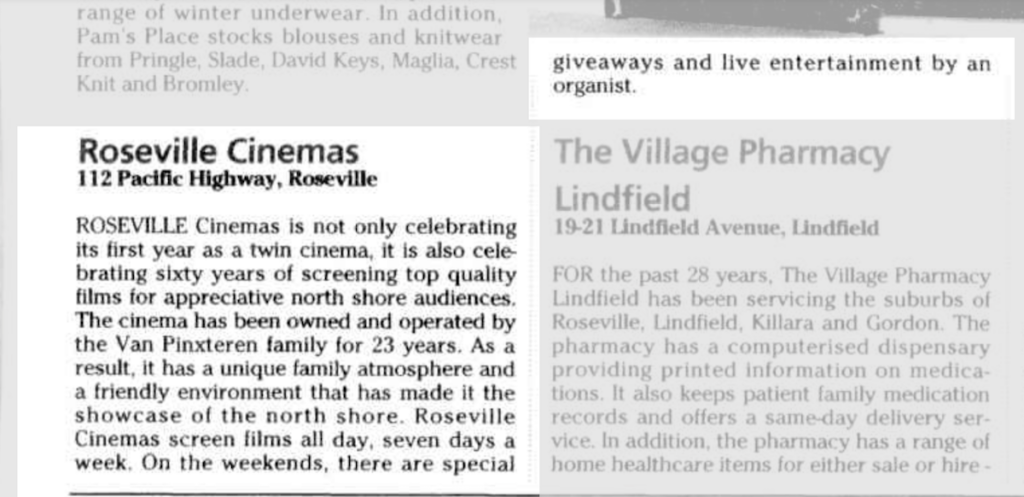
For now, the venue continues to trade normally, advertising current runs and welcoming moviegoers. Its ultimate fate will depend entirely on who holds the deed when the trustee closes the sale—leaving the Roseville community waiting anxiously for the next act.
Published 31-July-2026